
Stay Safe While Shopping Online: A Guide for Australian Seniors

Shopping from your lounge room has never been easier
Remember when doing the shopping meant a trip into town, queuing at the checkout, and lugging bags back to the car? These days, you can buy almost anything from the comfort of your favourite armchair — from groceries and gardening supplies to gifts for the grandkids. It's marvellous, really. A few clicks on your computer or tablet, and it arrives at your doorstep.

But here's the thing: while most online businesses are genuine and trustworthy,
there are some dodgy operators out there looking to take advantage of unsuspecting shoppers. Online shopping scams have become increasingly common across Australia, and unfortunately, older Australians are often targeted.
The good news? You don't need to be a technology expert to protect yourself. With a bit of know-how and some simple checks, you can shop online safely and with confidence.
How These Online Shopping Scams Actually Work
Scammers have become quite clever. They set up websites that look perfectly legitimate — complete with professional-looking logos, attractive product photographs, and enticing "special offers" that seem too good to miss. Some even copy the look of well-known Australian retailers.
You might come across these fake shops in several ways:
Through Facebook or Instagram advertisements that pop up in your feed, often showing products at unbelievably low prices
Text messages claiming to be from Australia Post or other delivery services, with links to supposed "tracking" pages
Email promotions that look like they're from brands you know
Search results on Google that appear alongside genuine businesses
These scammers are banking on you being excited about a bargain or in a hurry to make a purchase. Don't let them rush you.
Your Essential Checklist Before Buying
Before you hand over your money or card details to any online shop, take a few minutes to do these simple checks. Think of it as looking both ways before crossing the street — just sensible precautions.
1. Look for Contact Information
Any legitimate business should provide clear ways to get in touch. Scroll down to the bottom of the website and look for:
A physical Australian address (not just a post office box)
A landline phone number you can call during business hours
An Australian Business Number (ABN) — you can check if it's real on the Australian Business Register website
If this information is missing, or if the only contact method is an email address, that's a warning sign.
2. Check the Web Address Carefully
Have a close look at the website address in your browser's address bar (that's the long bar at the top of your screen)

Does it start with https://? That "s" stands for "secure" and means your information is encrypted. Most legitimate shopping sites have this.
Does the name look right? Scammers often use addresses that are almost correct but slightly different, like "amazen.com" instead of "amazon.com.au"
3. Question Prices That Seem Unrealistic
We all love a good bargain, but if something seems remarkably cheaper than everywhere else — say, a brand-new iPad for $300 when they normally cost $900 — it's probably not genuine. As the old saying goes, if it seems too good to be true, it probably is.
4. Search for Reviews and Warnings
This is one of the most useful tricks: open a new tab in your browser and type the shop's name into Google, followed by the words "scam" or "reviews". For example: "Bargain Electronics Australia scam".
You can also check the Australian Competition and Consumer Commission's Scamwatch website (scamwatch.gov.au) to see if others have reported problems.
Read what other customers have experienced. Are there lots of complaints about items never arriving or being completely different from what was advertised?
5. Look at the "About Us" Page
Genuine businesses usually have an "About Us" or "Our Story" page that tells you about the company, how long they've been operating, and where they're based. If this page is missing, very vague, or reads strangely (sometimes scammers use poor translations), be cautious.
How to Pay Safely
The way you pay for online purchases makes a huge difference to your protection.
Safe Payment Methods:
Credit cards offer the best protection. If something goes wrong, you can dispute the charge with your bank through what's called a "chargeback"
PayPal and similar services act as a middleman and offer buyer protection
Buy Now, Pay Later services like Afterpay (though only use these if you're comfortable with how they work)
Never, Ever Use:
Direct bank transfers — once the money leaves your account, it's nearly impossible to get back
Gift cards from Coles, Woolworths, iTunes, or anywhere else — no legitimate business asks you to pay with gift cards
Cryptocurrency or Bitcoin — these can't be traced or recovered
Wire transfers through Western Union or similar services
If anyone insists you must pay using these methods, it's definitely a scam. Walk away.
Keep Good Records
Just like you'd keep receipts for items bought in a shop, save confirmation emails and take screenshots of your order. Keep a record showing:
What you ordered and when
How much you paid
The website address
Any confirmation or tracking numbers
If something goes wrong, you'll have evidence to support a complaint or refund request.
What to Do If You've Been Caught Out
First, don't feel embarrassed. These scammers are professionals, and they trick people of all ages.
If you think you've been scammed:
Contact your bank immediately if you've shared card details or transferred money
Report it to Scamwatch at scamwatch.gov.au — this helps warn other Australians
Report it to the police through ReportCyber at cyber.gov.au
Tell your friends and family so they don't fall for the same trick
Sharing your experience is an important part of the process. The more people who are aware of a scam, the more protected everyone will be.
A Few Extra Tips for Peace of Mind
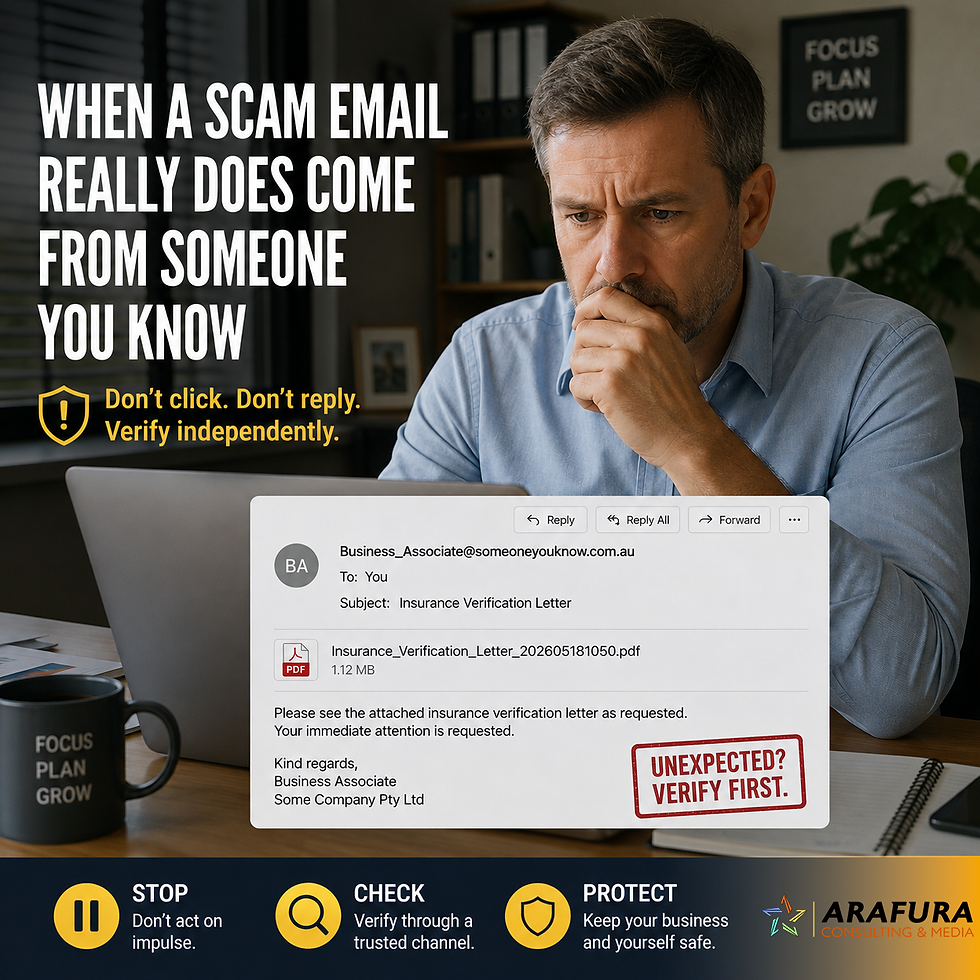
Don't click on links in unexpected texts or emails. If you get a message claiming to be from Australia Post, eBay, or any other service, go directly to their official website rather than clicking the link
Use different passwords for different shopping sites. Yes, it's a nuisance, but it means one scam won't affect all your accounts
Be wary of pressure tactics. Scammers love countdown timers saying "Only 2 left!" or "Sale ends in 10 minutes!" Legitimate businesses don't usually pressure you like this
Stick with retailers you know and trust, especially for expensive purchases
If shopping on your phone, be extra careful — it's harder to see web addresses and security indicators on smaller screens
Shopping Online Should Be Enjoyable
Once you know what to look for, online shopping can be wonderfully convenient and perfectly safe. You can compare prices, read reviews, and shop at any time that suits you, even in your pyjamas at midnight if that's what you fancy!
The key is simply to stay alert and take a moment to check before you buy. Those few extra seconds could save you hundreds of dollars and a great deal of frustration.
Being Smart • Secure • Connected means shopping with confidence — not worry. You deserve to enjoy the convenience of modern technology without the stress of wondering whether it's safe.
Remember: there's no shame in taking your time, asking questions, or deciding not to proceed with a purchase if something doesn't feel right. Trust your instincts — they've served you well this long!


Comments