
Small Business Cyber Safety: 7 Simple Steps That Cost Nothing

Running a small business is demanding, and cybersecurity often feels overwhelming.
However, strong protection for small business cyber safety does not always require lots of your time or expensive software. In fact, the most effective safeguards are simple habits.
Here are seven practical steps every Australian small business can implement today.
1. Use Strong, Unique Passwords
Avoid using the same password across platforms. To help you keep track of your passwords, consider a reputable password manager.
2. Turn on Two-Factor Authentication
This single step blocks most hacking attempts. Whenever you see this option, switch it on.
3. Update Your Software
Updates can sometimes be annoying interruptions, but they're important because they fix security weaknesses. Check all your devices regularly and make sure they are up to date.
4. Train Staff to Spot Phishing
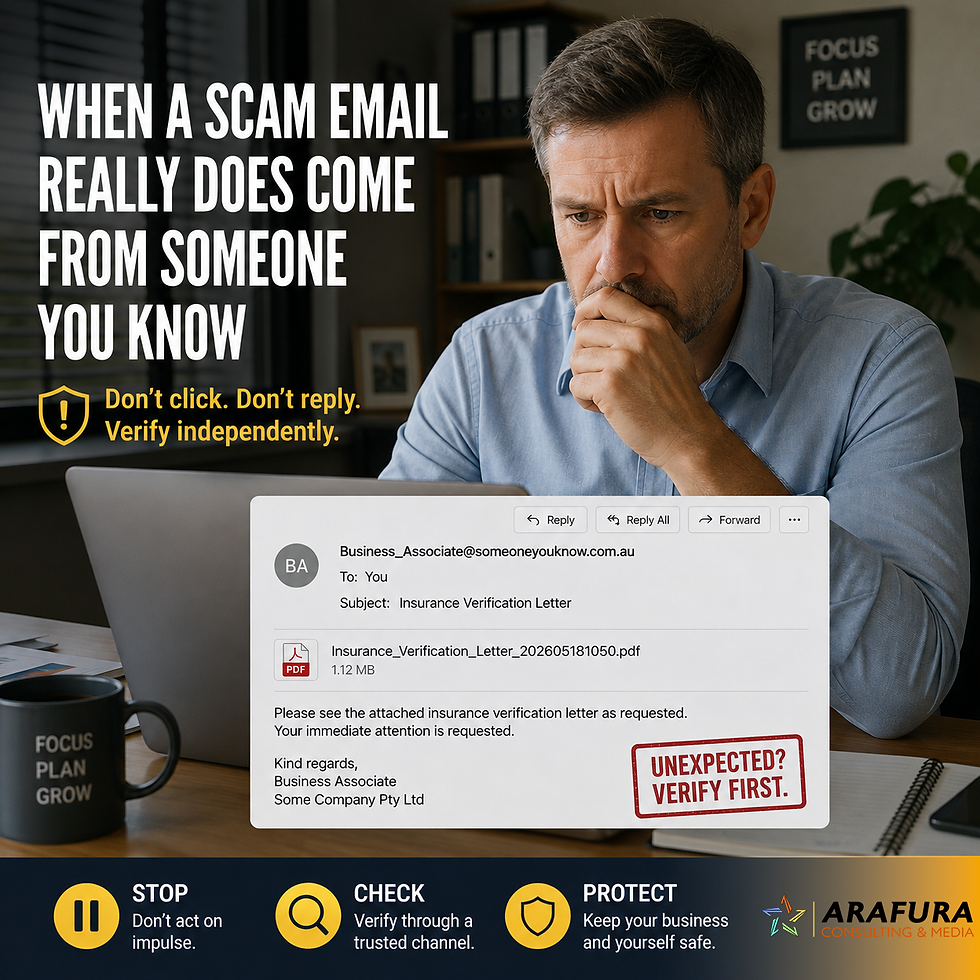
Most breaches begin with a suspicious email, so it's important to train staff how to recognise them and what to do with them.
One simple step is to encourage staff to slow down and question unexpected requests.
5. Back Up Your Data
Use automatic cloud backups for the most trusted and effective data backups. Apple, Android and Microsoft users all have this capability built right into the devices you use now. Switch them on and remember to test them occasionally.
6. Limit Access
Not every staff member needs access to every system, and never share a common password if it's also used on your key systems and accounts.
7. Create a Simple Response Plan
If something goes wrong, who do you call? What do you shut down?
Planning reduces panic and less panic means less damage.
Final Thoughts on Small Business Cyber Safety
Cyber security is not about fear. It is about preparation and vigilance. Small, consistent actions create strong, lasting protection.



Comments