
Stay Cyber Safe This Tax Season: A Simple Guide for Australians

Tax time in Australia can feel stressful enough without scammers trying to take advantage of you. Unfortunately, every year during tax season, cyber criminals ramp up their efforts to trick everyday Australians into handing over personal information, money, or access to their accounts.
At Arafura Consulting & Media, we’re seeing a steady rise in scams targeting people through emails, text messages, and even phone calls pretending to be from trusted organisations like the Australian Taxation Office.
The good news? With a little awareness and a few simple habits, you can stay safe.
Why Tax Time Attracts Scammers
Scammers know that during tax season:
People expect messages from government agencies
There’s often money involved (refunds or payments)
Many Australians feel rushed or unsure
This creates the perfect environment for fake messages that look legitimate — but are designed to steal your information.
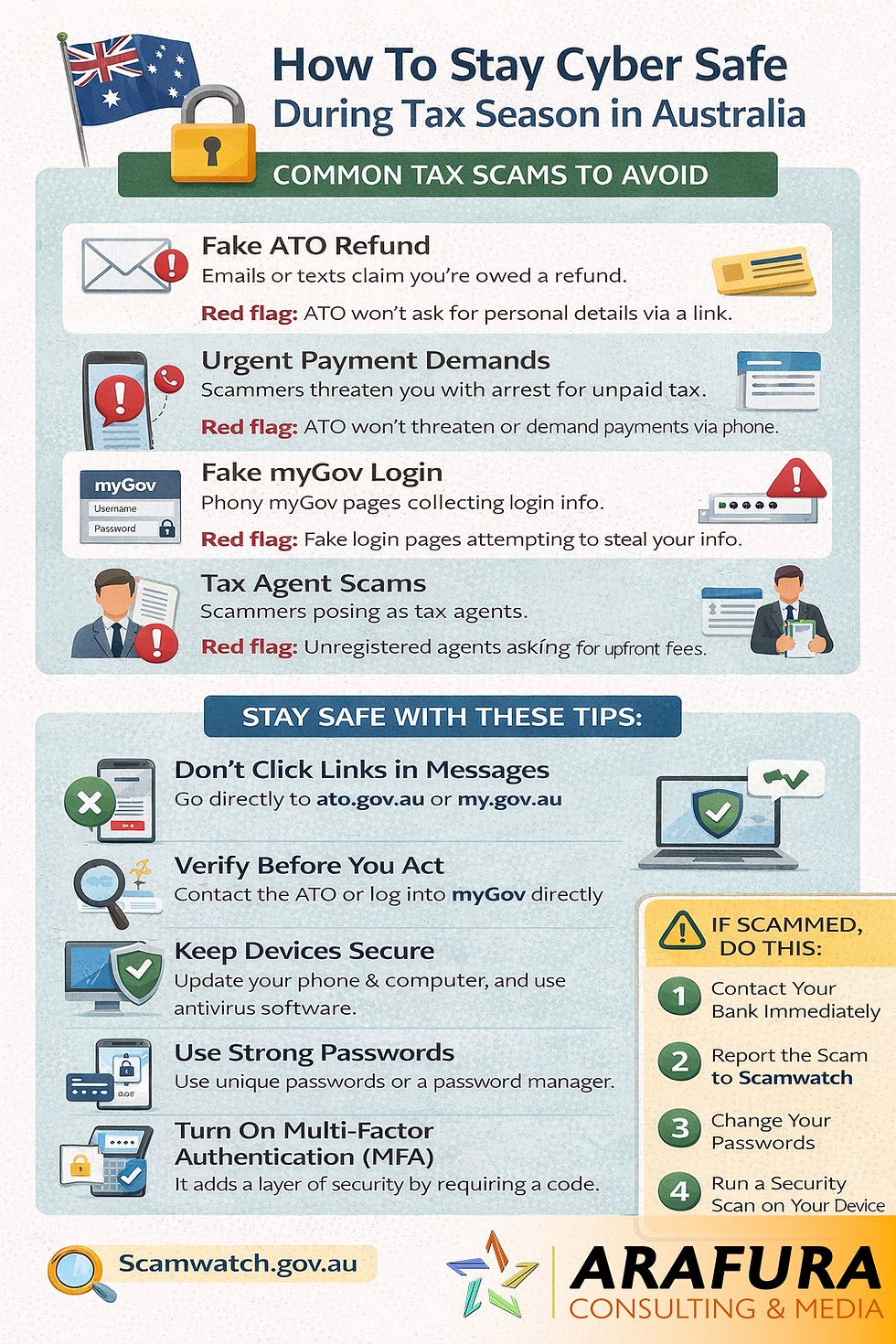
Common Tax Scams in Australia
Here are the most common tricks being used right now:
1. Fake ATO Refund Messages
You might receive an email or SMS saying you’re owed a refund. It often includes a link asking you to “confirm your details.”
👉 Red flag: The ATO will never ask for personal or financial details via a link in a message.
2. Urgent Payment Threats
Scammers may claim you owe money and threaten penalties, legal action, or even arrest if you don’t pay immediately.
👉 Red flag: The ATO does not threaten arrest or demand immediate payment via phone, email, or text.
3. MyGov Impersonation
You may receive messages pretending to be from myGov asking you to log in.
👉 Red flag: Fake login pages designed to steal your username and password.
4. Tax Agent Scams
Fraudsters may pose as tax agents offering to “help” you lodge your return quickly.
👉 Red flag: Unregistered or pushy operators asking for upfront payment or sensitive details.
Simple Ways to Stay Safe this Tax Season
Protecting yourself doesn’t require technical skills — just a few smart habits:
✔️ Don’t Click Links in Messages
If you receive a message claiming to be from the ATO or myGov, don’t click the link. Instead, go directly to the official website by typing it into your browser.
✔️ Verify Before You Act
If something feels off, stop and check:
Contact the ATO directly
Log into your myGov account manually
Speak with a trusted family member or adviser
✔️ Keep Your Devices Secure
Make sure you:
Keep your phone and computer updated
Use antivirus software
Enable automatic updates
✔️ Use Strong Passwords
Create unique passwords for important accounts, especially myGov and banking.
👉 Tip: Consider using a password manager.
✔️ Turn On Multi-Factor Authentication (MFA)
We talk about this a lot because MFA adds an extra layer of protection by requiring a code sent to your phone or app, and it is a very effective way to fortify your security.
What To Do If You’ve Been Scammed
If you think you’ve been targeted or have already clicked a suspicious link:
Act Quickly:
Contact your bank immediately
Report the scam to Scamwatch
Change your passwords
Run a security scan on your device
A Note for Seniors and Families
Scammers often target older Australians because they are seen as more trusting and may not be as familiar with online risks.
If you have a parent, grandparent, or neighbour:
Talk to them about these scams
Encourage them to double-check before responding
Offer to help them set up secure accounts
A quick conversation today could prevent a costly mistake tomorrow.
Final Thoughts
Tax time doesn’t have to be a stressful or risky experience. By staying alert and taking a few simple precautions, you can protect your personal information and your finances.
If you’re ever unsure — pause, check, and ask. It’s always better to take a moment than to rush into something that could cost you.
Stay safe this tax season with good cyber habits.


Comments